Energy Saving Lighting Controls: Cut Use, Extend Life
Energy saving lighting controls are the cheapest kilowatt-hours in any building — the ones you never spend. Lighting is commonly put at somewhere around 10–20% of the electricity a commercial building uses, and a large part of that is light burning in empty rooms, at full output when half would do, or against a window flooded with daylight. Controls close those gaps.
Start from the equation: every kilowatt-hour your lighting uses is light output multiplied by hours of operation. There are only two levers. You either reduce the output (fewer watts while the light is on) or reduce the hours (light on for less time). Every control strategy worth installing pulls one of those two levers, and the best ones pull both.
The sections below cover the strategies that move those levers, what each typically saves, why good controls make your fixtures last longer, and how to keep the savings running when the internet goes down. If you are speccing a system, it pairs well with our overview of wireless lighting control and the presence-based Swarm approach covered further down.
Why lighting controls save energy: the two levers
Take the equation apart and the two levers become concrete.
Reduce output. An LED behaves close to linearly: cut its light output to 70% and its power draw falls to roughly 70%. Dimming and task tuning live here. You are still lighting the space the whole time, but with fewer watts.
Reduce hours. Occupancy sensing, daylight harvesting, and scheduling live here. The connected load might be unchanged, but the light is on for far fewer hours — off in an empty room, dimmed while the sun does the work, dark on a calendar that matches how the building is actually used.
Most real savings come from combining the two. A warehouse aisle that dims to 30% when empty and only ramps to full as a forklift approaches is pulling both levers at once, every hour of every shift. That combination is where the headline savings figures come from, and it is why a well-designed system beats any single trick.
The core energy saving lighting control strategies
Four strategies do the heavy lifting. Every energy efficient lighting control system is some combination of these, so it helps to know what each one attacks and roughly what it returns. Treat the percentages below as industry-typical ranges, the kind published by the DOE, the DesignLights Consortium, and the Lighting Controls Association — useful for sizing a project, not a promise for your specific building.
Dimming and task tuning
Dimming reduces output, and because LED power tracks output closely, it saves energy in near-direct proportion. The bigger structural win is task tuning: setting each space to the light level the task genuinely needs rather than the maximum the fixture can produce. Most spaces are commissioned brighter than the work requires, so trimming to target — and holding it there — is a permanent saving on every operating hour, commonly in the range of 10–40% depending on how over-lit the space started.
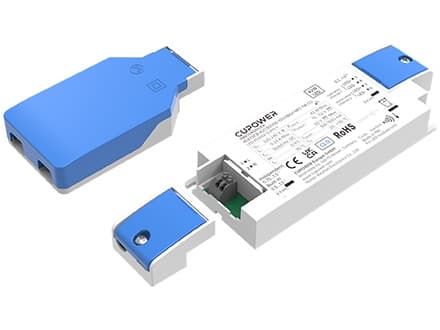
MESHLE dims through PWM, phase, DALI, and 0–10V drivers, so task-tuning targets apply whether you are running LED strip, downlights, or a DALI luminaire. The DALI interface gives you addressable per-fixture dimming for exactly this kind of trim. For tunable-white fittings that need the same per-fixture trim on the white balance itself, the MESHLE Human Centric Lighting driver is the built-in engine — a constant-current tunable-white driver with MESHLE Bluetooth Mesh on board.
Occupancy and vacancy sensing
This lever cuts hours. A sensor detects whether a space is used and switches or dims the light down when it is empty. Occupancy control turns lights on automatically when someone enters; vacancy control requires a manual switch-on but auto-off, which tends to save more because lights are never triggered by a passer-through.
The sensing element matters. PIR (passive infrared) reacts to moving heat and is reliable for clear line-of-sight; ultrasonic detects motion around obstructions and suits partitioned or L-shaped spaces; dual-technology sensors require both signals to avoid false triggers. Published savings for occupancy control commonly sit in the 20–40% range, and climb well above that in restrooms, storage, and stairwells that sit empty most of the day.
Daylight harvesting
Daylight harvesting reduces output by dimming electric light to match the daylight already in the room, holding a steady target light level as the sun changes. In a perimeter zone with good glazing, this is often the single largest saving available, with published ranges reaching 20–60% in genuinely daylit areas.
There are two control approaches. Open-loop sensors read incoming daylight only and dim on a pre-set curve; closed-loop sensors read the total light in the space (daylight plus electric) and continuously correct to the target. Our daylight sensor guide covers the sensing pipeline and open- versus closed-loop trade-offs in depth. MESHLE reads ambient lux from combined PIR-plus-lux sensors over MESHLE Bluetooth Mesh and dims dimmable drivers to hold the target, so the same sensor that drives occupancy also drives daylight regulation.
Scheduling and astro time control
Scheduling cuts hours on a calendar rather than a sensor. Lights follow the building's real occupancy pattern: off after hours, dimmed at cleaning times, on for a shift. Astro scheduling ties events to local sunrise and sunset instead of fixed clock times, so outdoor and facade lighting tracks the seasons automatically rather than running an hour too long every evening in summer. MESHLE stores these schedules — up to eight per day, with configurable sunrise/sunset offsets — on the mesh nodes themselves, so they run on-device without a phone or a server in the loop.
Presence-based control: smooth, area-aware dimming
Most occupancy control is blunt. A zone of lights snaps to full when any sensor fires and snaps off when a timer expires, which produces the familiar failure modes: aisles that go dark just ahead of you, whole bays lit because one person walked in, and lights that cut out while you are still working because you sat too still for the timer.
MESHLE Swarm fixes this by making presence follow movement across the network. Instead of one sensor controlling one zone, presence propagates node to node, and each light sets its own brightness from the closest active movement. The lights nearest a person or vehicle go to full; neighbouring lights dim in a smooth gradient; the rest stay off or idle. As someone moves, the bright zone travels with them.
For energy, that gradient is the point. A crude zone lights everything or nothing; Swarm lights only the fixtures near the actual movement and dims the surround, so a large open space spends most of its hours mostly dark while still feeling safe and lit in the direction of travel. It also removes the late-trigger problem — because neighbouring lights are already responding, you never walk into a dark patch waiting for a sensor to catch up. There is no central controller to fail, and each light stays aware of every nearby sensor, so it recalculates rather than dropping to dark when one sensor goes idle.
How MESHLE combines daylight, motion, Swarm, and human-centric light
Each strategy above is usually sold as its own box. MESHLE runs all of them on one Bluetooth Mesh from one set of combined sensors, so they work as a single system rather than four controls fighting for the same ceiling. A single combined PIR-plus-lux sensor supplies two signals at once — the PIR channel drives presence, the lux channel drives daylight regulation — and the same mesh layers Swarm presence propagation and tunable-white human-centric lighting on top. No extra gateways, no second network, no cloud.
That combination saves energy and puts the person first at the same time, because it controls four things together:
- Where light is needed — Swarm brings up the fixtures around actual movement and dims the rest.
- Ahead of movement — presence propagates node to node, so the lights in your path are already up before you reach them and you never walk into a dark patch.
- As much as is needed — daylight harvesting dims each zone to top up the daylight already in the room, holding the target level instead of stacking full output on top of the sun.
- In the right white — tunable-white drivers shift colour temperature on a circadian schedule: cooler, brighter white through the working day, warmer tones toward evening, so the light tracks people's body clock instead of holding one flat colour all day.
Pulling all four from one sensor set is also where the energy math compounds: presence cuts the hours, daylight harvesting cuts the output, and because both run on the same nodes the two savings stack in every zone at once — while the occupant notices nothing except that the light is always right.
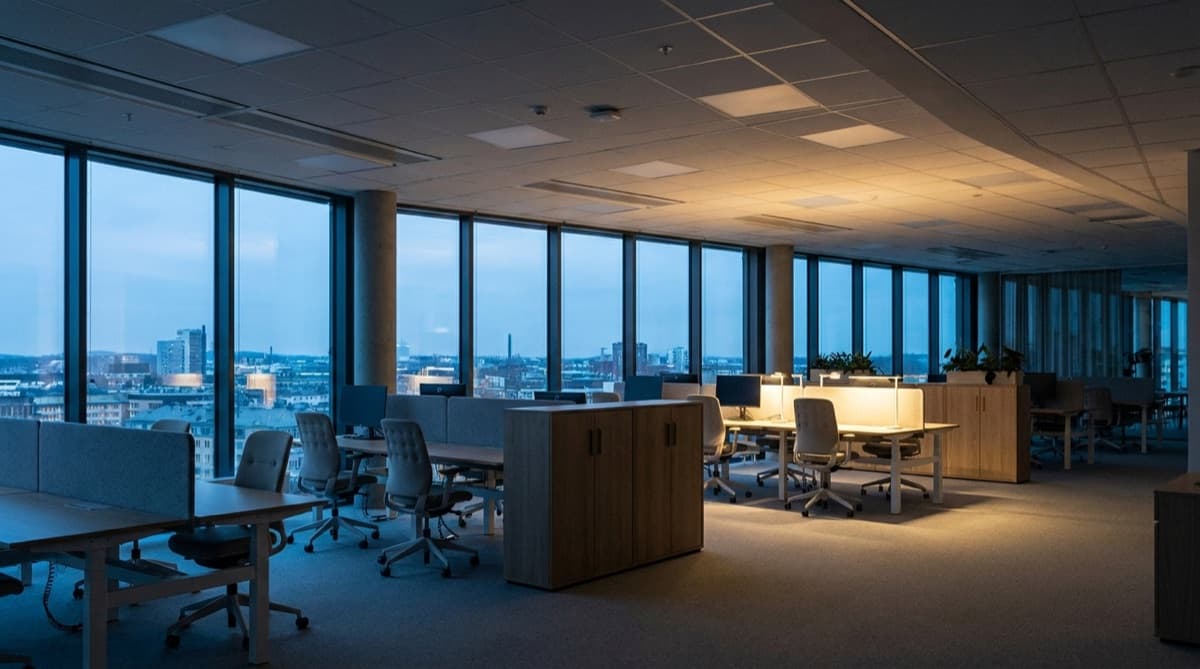
One mesh carries daylight harvesting, presence, Swarm, and human-centric white at once, all of it running offline on the nodes themselves — the difference between a stack of single-purpose controls and one system that gives a building both a lower energy bill and better light to work under. The live MESHLE office scene below runs Swarm and daylight regulation together.
How energy saving lighting controls extend hardware life
Controls also make fixtures last longer, which is a second saving — it lands on the maintenance budget rather than the energy bill. Here is the mechanism.
Two things wear an LED fixture: hours and heat.
Hours are straightforward. LEDs are rated for a finite service life — typically tens of thousands of hours to a defined lumen-maintenance point. Every hour a control keeps a fixture off or idle is an hour of that rated life you did not spend. Occupancy sensing and scheduling, by cutting run hours, stretch the calendar life of the hardware directly.
Heat is the one most vendors skip past. When you dim a fixture, the driver delivers less current to the LEDs. Lower drive current means the LED junction runs cooler, and junction temperature is the single biggest factor in how fast an LED ages — run it hot and its output decays faster and its usable life shortens. The same lower current eases the LED driver, which is usually the first component in a fixture to fail, and it too runs cooler and lasts longer at reduced load. So a fixture that spends its life dimmed and often off is running cooler and fewer hours on both counts. That shows up as fewer failed drivers, fewer diode replacements, and longer intervals between maintenance trips — real money in a building with hundreds of fixtures on high ceilings.
Wired vs wireless, cloud vs offline
Networked control is the modern default, because the savings come from control logic that has to talk across fixtures, sensors, and schedules. The two decisions that actually shape a project are how the control signal travels and where the control logic runs.
Wired vs wireless is mostly a retrofit question, covered in the next section. Cloud vs offline is the one most guides get wrong by assuming a cloud is always present.
A cloud-dependent system routes decisions through a remote server. When the internet drops — an ISP outage, a failed router, a construction crew through a fibre line — the control logic can stall, and lighting falls back to dumb behaviour or manual switches until the connection returns. For a strategy whose entire value is running the right light at the right time, an outage is a direct hit to the savings.
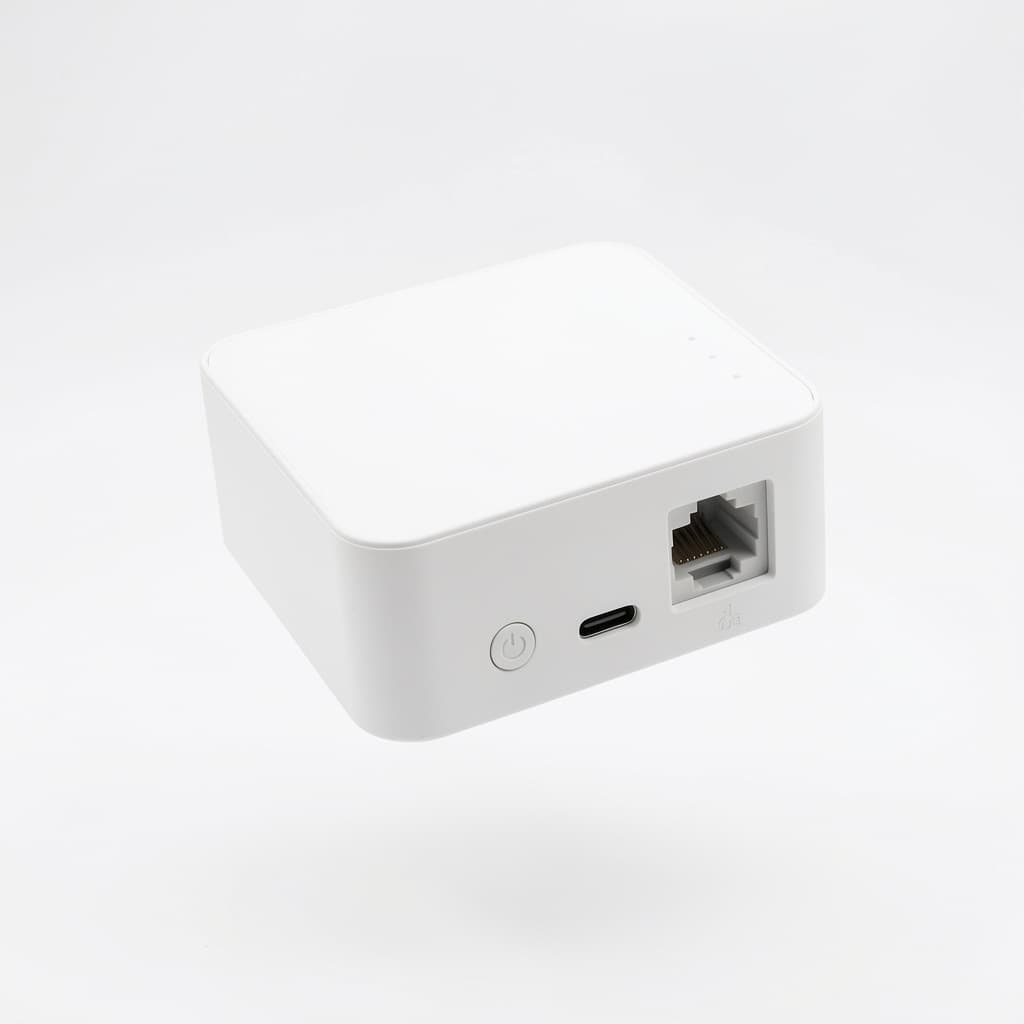
MESHLE runs offline-first. The whole control loop lives locally on the MESHLE Bluetooth Mesh: sensors talk to drivers, daylight dimming holds its target, schedules fire on-device, and Swarm propagates presence, all without a cloud in the path. An internet outage does not touch it — occupancy sensing, daylight harvesting, and scheduling keep saving energy through the outage exactly as before. The cloud, via a Gateway, is there for remote access, dashboards, and BMS integration over REST, MQTT, Modbus TCP/IP, and BACnet™ — an add-on for oversight, never a dependency for the lights to work. Our offline-first smart lighting guide covers the architecture in full.
How much can you save? Savings and payback by strategy
Here is the field in one table. Ranges are industry-typical figures for orientation; actual savings depend on the space, its current lighting, and how it is used.
| Strategy | Typical energy savings | Best-fit spaces |
|---|---|---|
| Dimming and task tuning | ~10–40% | Over-lit offices, retail, any commissioned-too-bright space |
| Occupancy / vacancy sensing | ~20–40% | Restrooms, storage, corridors, stairwells, warehouses |
| Daylight harvesting | ~20–60% | Perimeter offices, atriums, glazed retail, skylit warehouses |
| Scheduling / astro control | Varies by run pattern | Outdoor, facade, after-hours zones, shift-based buildings |
| Presence-based (Swarm) gradient | Combines occupancy + dimming | Warehouses, garages, corridors, large open areas |
The strategies stack — a perimeter office with daylight and intermittent occupancy earns from both levers at once — so a whole-building program typically beats any single row.
On payback, the honest answer is a range. Commercial controls retrofits are often cited in the low single-digit years, driven by run hours and local electricity rates; the more hours and the higher the tariff, the faster it returns. Wireless controls shorten it by cutting the labour of pulling control cable, and utility rebates for occupancy and daylight controls are common in many regions and reduce the upfront cost. For a worked example of daylight harvesting in the field, see our retail daylight harvesting case study.
Choosing an energy efficient lighting control system
With the strategies clear, choosing a system comes down to a short checklist.
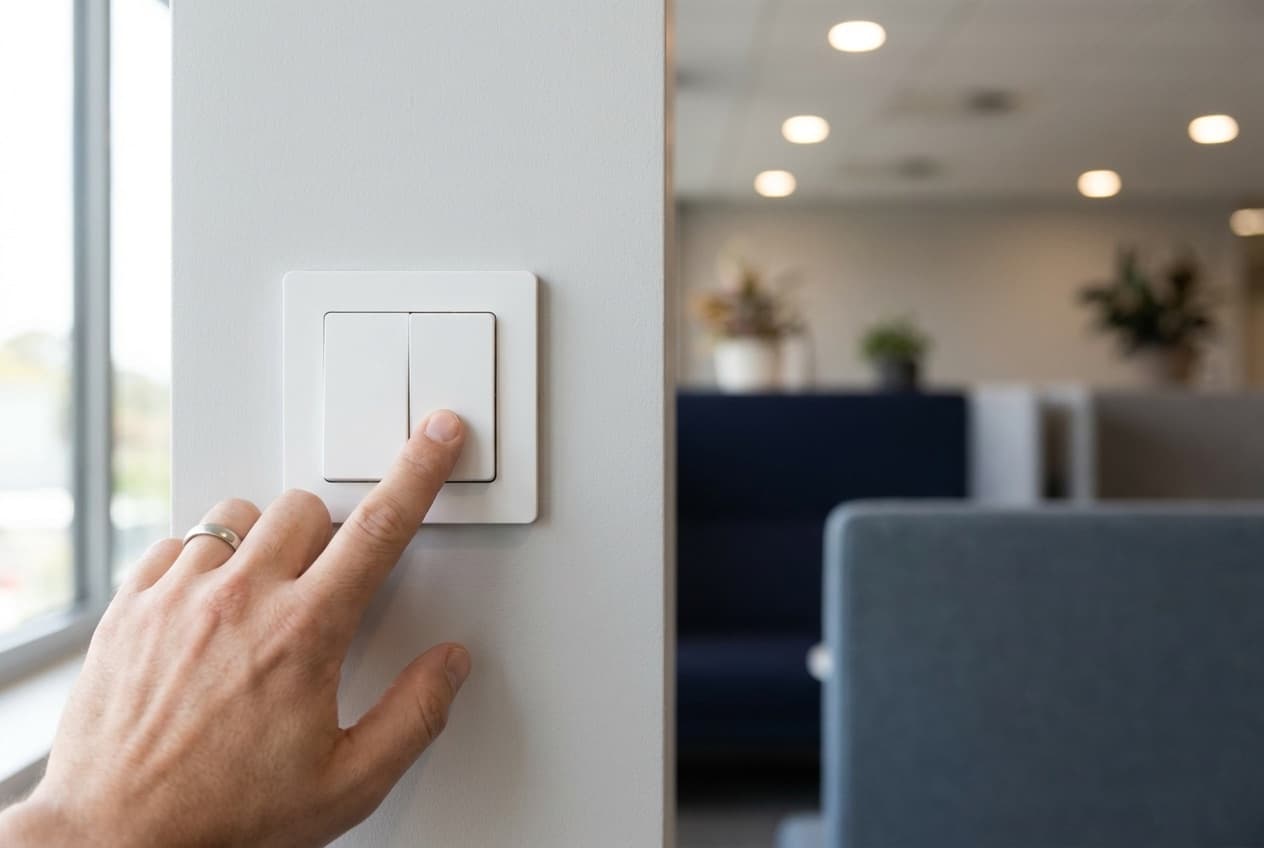
Retrofit or new-build? In a new build you can run control cabling freely. In an existing building, wireless is usually decisive: MESHLE sensors and battery-free switches join the mesh with no new control wiring, so you add controls without opening ceilings or walls. That saved labour is often what makes a retrofit pencil out — it is the same wireless-retrofit path behind our warehouse and industrial and office and commercial lighting.
Combined or separate sensors? Prefer combined presence-plus-daylight sensing. A single sensor that reads both PIR occupancy and ambient lux drives occupancy control and daylight harvesting at once, which is fewer devices to mount and commission for more of the savings. MESHLE's combined PIR-plus-lux sensors do exactly this over MESHLE Bluetooth Mesh.
What can it dim, and how? Check the driver interfaces you actually have on site. MESHLE dims via PWM, phase, DALI, and 0–10V, so a mixed estate of strip, downlights, and DALI luminaires runs on one mesh rather than several island systems.
Does it run offline? For anything where lighting is safety- or operations-critical, confirm the control loop runs locally and does not depend on a cloud to keep working.
Does it integrate upward? If the building has a BMS, confirm the system can report and take commands over a standard protocol. A MESHLE Gateway bridges the mesh to REST, MQTT, Modbus TCP/IP, and BACnet™, and is Matter-ready for smart-home platforms.
Work through that checklist against your building to turn the ranges above into a figure for your space. When you are ready to size the sensor mix, driver interfaces, and offline control loop, that is the point to spec a MESHLE system.
Related MESHLE products
The hardware behind everything above — the pieces you'd actually spec into a project like this.
Frequently asked questions
Which lighting control method saves the most energy?
There is no single winner — it depends on the space. In rooms with daylight, daylight harvesting usually saves the most; in intermittently used spaces like restrooms, storage, and corridors, occupancy sensing wins; in over-lit spaces, dimming and task tuning delivers the fastest gain. The largest savings come from combining all three, because each attacks a different source of waste.
Does dimming LEDs actually save electricity?
Yes. An LED's power draw drops roughly in proportion to its light output, so dimming a fixture to 70% pulls close to 70% of full power. Task tuning — permanently setting a space to the light level the task actually needs instead of the maximum the fixture can produce — locks in that saving every hour the lights are on.
Do occupancy sensors really save energy, and how?
They do, by cutting hours rather than watts. A sensor switches or dims lighting down when a space is empty, so you stop paying to light rooms nobody is in. Industry figures for occupancy-based control commonly land in the 20–40% range, higher in spaces with unpredictable, intermittent use.
What is an energy efficient lighting control system?
It is a set of networked controls — sensors, dimmers, drivers, switches, and schedules — that together reduce lighting energy by supplying only the light output a space needs, only for the hours it is occupied. A good one combines occupancy and daylight sensing, dims rather than just switching, and keeps running when the internet is down.
How much can smart lighting controls save?
Typical published ranges put occupancy sensing around 20–40%, daylight harvesting around 20–60% in daylit zones, and task tuning in the range of 10–40%, all depending heavily on the space and how it is used. These stack: a room with both daylight and intermittent occupancy can save more than any single strategy alone. Treat any single number as an estimate until it is measured in your building.
What is the payback period for lighting controls?
Payback is often cited in the low single-digit years for commercial retrofits, driven by the size of the energy bill and local electricity rates. Wireless controls shorten it further by removing control-cabling labour, and utility rebates for occupancy and daylight controls can cut the upfront cost. The exact figure depends on your rates, run hours, and install method.
Do lighting controls extend LED or fixture life?
Yes, through two mechanisms. Running fixtures fewer hours delays wear directly, and dimming lowers the drive current, which lowers the LED junction temperature. Since heat is what ages both the diodes and the LED driver — usually the first component to fail — cooler operation buys longer service life and fewer replacements.
What are the main types of lighting control systems?
The building blocks are dimming, occupancy and vacancy sensing, daylight harvesting, and time-based scheduling. Underneath, controls are either wired or wireless, and either cloud-dependent or able to run locally. Modern systems network these together so one sensor reading can drive dimming, schedules, and presence behaviour at once.
Do lighting controls work without internet or the cloud?
The right ones do. MESHLE's offline-first Bluetooth Mesh runs the entire control loop locally on the mesh — occupancy sensing, daylight dimming, schedules, and Swarm — with no cloud dependency. An internet or ISP outage does not stop the lights from responding or the savings from continuing.
Wired or wireless — which saves more energy and is easier to retrofit?
Both save the same energy once running, because the savings come from the control logic, not the wiring. Wireless wins on retrofit: sensors and battery-free switches join the mesh with no new control cabling, so you can add controls to an existing building without opening ceilings or walls. That lower install cost is usually what decides a retrofit.